
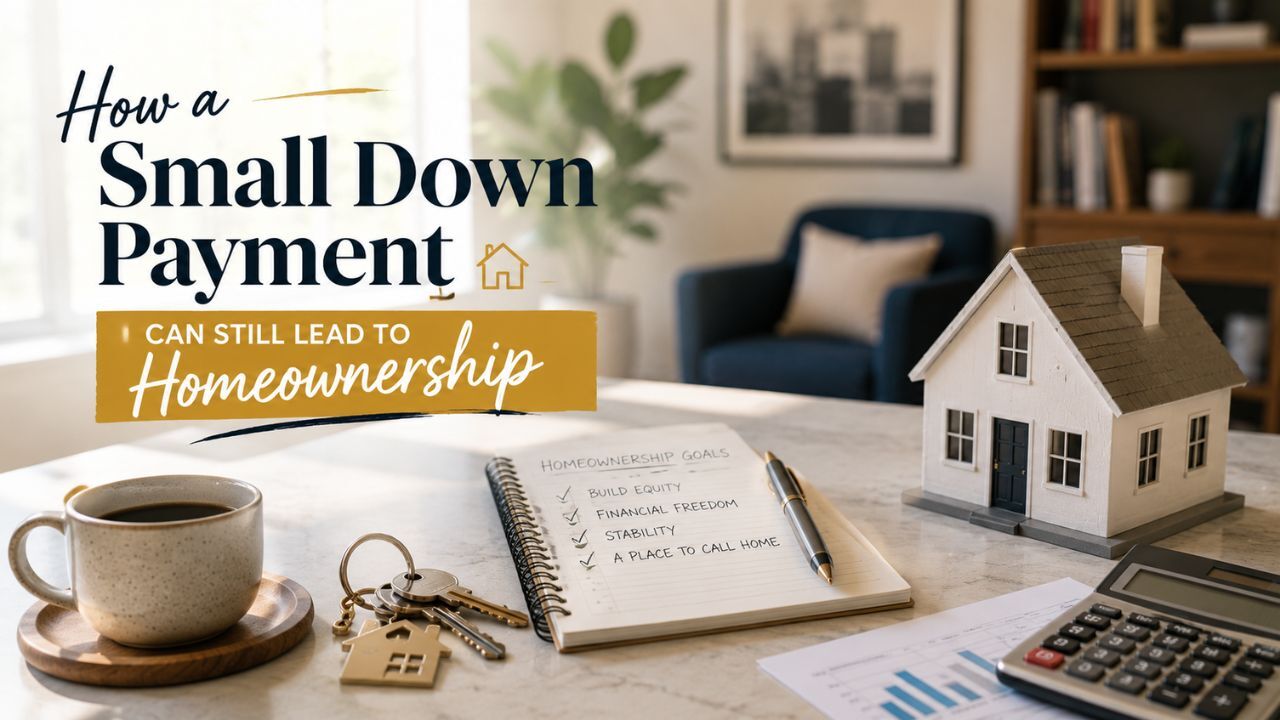
 Many people believe they need a large down payment before they can buy a home. While making a larger down payment can have benefits, it is not the only path to homeownership. Today’s mortgage programs offer a variety of options that allow qualified buyers to purchase a home with much less money upfront than they may expect. Understanding these opportunities can help turn the dream of owning a home into a reality sooner than you think.
There Are More Loan Options Than You May Realize
Many buyers assume they need to save 20 percent of a home’s purchase price before applying for a mortgage. In reality, there are loan programs that allow qualified buyers to purchase a home with much smaller down payments. Depending on the loan program and your financial situation, you may be able to buy a home while preserving more of your savings for moving expenses, emergency funds, or future home improvements.
A Larger Down Payment Is Not Always the Best Choice
While putting more money down can reduce your monthly payment and lower your loan balance, it is also important to maintain healthy savings after closing. Using every available dollar for your down payment may leave you financially stretched if unexpected expenses arise. Finding the right balance between your down payment and your savings can provide greater financial security after you move into your new home.
Down Payment Assistance May Be Available
Many local, state, and national programs are designed to help qualified homebuyers with down payment or closing costs. These programs vary by location and eligibility requirements, but they can make homeownership more accessible for buyers who meet the qualifications. Your mortgage professional can help determine whether assistance programs are available in your area.
Focus on Your Overall Financial Picture
Your down payment is only one part of the mortgage approval process. Lenders also consider your income, employment history, credit profile, and existing debt when reviewing your application. Building healthy financial habits before purchasing a home can improve your overall borrowing power and help you qualify for the loan that best fits your needs.
Speak With a Mortgage Professional Early
One of the biggest mistakes buyers make is assuming they are not ready to purchase a home without first speaking to a mortgage professional. A conversation early in the process can help you understand your options, estimate how much you may need for a down payment, and create a personalized plan to reach your homeownership goals.
Homeownership may be closer than you think. By exploring today’s mortgage options and understanding the resources available, you may discover that a small down payment is all you need to take the next step toward owning a home.
 Many buyers focus heavily on saving for the down payment. That is important, but it is not the only money that matters when buying a home. Cash reserves can be just as important because they help protect you after closing. A strong home purchase plan should include both the money needed to buy the home and the money needed to feel secure once you own it.
 Buying a home, a car, or any significant investment often involves making a down payment. The down payment is a crucial part of the purchasing process, as it can impact your loan terms, interest rates, and monthly payments. But how much should you save for a down payment, and why is it so important?
 Buying a home is a major financial milestone, and saving for a down payment can be one of the biggest challenges. If you’re struggling to gather the necessary funds, you might be considering using your 401(k) retirement savings to cover the cost. While this option is available, it’s essential to weigh the potential benefits and risks before making a decision.
 When considering the journey of purchasing a new home, one of the fundamental decisions you’ll encounter revolves around determining the appropriate amount of money to allocate for your down payment. It’s a decision-making process that involves weighing the benefits of opting for a larger down payment against the potential advantages of utilizing some of those funds to purchase “discount points,” thereby reducing your interest rate. Each option carries its own set of merits and demerits, and the optimal choice for you hinges on a careful examination of your unique financial circumstances and objectives.